If you are in Manchester and looking for drug or alcohol treatment, you have three genuine routes: NHS and council-commissioned services, which cost nothing; private residential treatment in the UK; and residential treatment abroad. We run the third. This page covers all three properly, because choosing the wrong one wastes months you may not have.
The Orchid Recovery is in Chiang Mai, Thailand. We have no facility in Manchester and no facility anywhere in the UK. Anyone telling you otherwise about their own service is worth checking.
If you are in immediate danger, call 999. If someone has taken an overdose, call 999 and stay with them.
For urgent help out of hours, including in a mental health crisis, call NHS 111. The Samaritans are free on 116 123, day or night. For drugs specifically, FRANK is on 0300 123 6600, 24 hours a day.
Start here: the free route, and why the usual argument against it is wrong
Manchester’s community drug and alcohol services are commissioned by the council and free at the point of use. You can self-refer, and you do not need a GP letter to start.
Rehab marketing tends to skip past this with a line about waiting lists. Here is the actual national figure. Of everyone starting substance misuse treatment in England in 2024 to 2025, 99% started within three weeks of being referred (OHID, adult substance misuse treatment statistics).
Three weeks. If somebody tells you the free route means a year on a list, they are selling you something.
What the free route does have is a different limitation, and it is the honest one: most of it is community based, meaning you attend appointments and go home. Residential rehabilitation exists within the system but it is commissioned in small volumes, funding is decided case by case, and it is not something you simply request.
So the real question is not free versus paid. It is community versus residential.
If you already know community treatment is not going to be enough, that is the point at which talking to us makes sense. We are a residential centre in Chiang Mai, not a Manchester clinic, and fees start at USD 10,900 for four weeks. WhatsApp +66 985 245 093 is usually easiest from the UK given the six or seven hour difference, and admissions@orchidrecoverythailand.com reaches the same team.
Who is actually in treatment, and where you fit
England had 329,646 adults in contact with drug and alcohol treatment services in 2024 to 2025, a 6% rise on the previous year. The split:
| Substance group | People in treatment | Share |
|---|---|---|
| Opiates | 138,255 | 42% |
| Alcohol only | 99,955 | 30% |
| Non-opiate and alcohol | 47,758 | 15% |
| Non-opiate only | 43,678 | 13% |
Source: OHID, adult substance misuse treatment statistics 2024 to 2025.
We have deliberately not published a Manchester-specific number. Local authority level treatment data sits in NDTMS and the detailed reports are restricted to commissioners, so any city figure you see on a rehab website is either sourced from a commissioner report or invented. Ours would be the second, so it is not here.
When community treatment is the right answer
For a large number of people it genuinely is, and we would rather say so than take a booking that should not have happened.
Community treatment tends to work when the home environment is stable, when there is someone supportive in the house, when work or childcare cannot be paused, and when the dependence has not reached the point where daily life is organised around it.
It has a real advantage that residential treatment does not: you practise recovery in the environment where you actually live. Nothing has to transfer afterwards, because nothing was ever removed.
Start at Manchester City Council’s alcohol, drugs and substance use pages, or through the NHS route.
When residential treatment earns the cost
Residential care changes the odds in specific situations:
- When the environment is part of the dependence. If supply, the people you use with, and the routine that carries it are all in the same few postcodes, treatment that sends you home each evening is asking a great deal.
- When withdrawal needs medical supervision. Alcohol and benzodiazepine withdrawal in particular can be dangerous (Trevisan and others, 1998; Pétursson, 1994), and a supervised detox is not an optional upgrade.
- When community treatment has been tried more than once. Not as a judgement. It is information about what this particular dependence needs.
- When there is a co-occurring mental health condition driving the use, which needs treating at the same time rather than afterwards.
Residential treatment in the UK, privately, is expensive. The NHS guidance is brief about it: “You’ll need to pay for private treatment.” It does not put a figure on that, and neither will we for a market we have not surveyed.
Manchester to Chiang Mai, practically
If treatment abroad is on the table, the logistics matter more than the brochure.
Getting here. There is no direct flight from Manchester to Chiang Mai. The realistic routings are one stop through a Gulf hub or through Bangkok, typically 15 to 20 hours door to door depending on the connection. Manchester Airport has good connectivity to all of them, so you are not adding a domestic leg to Heathrow first.
Timing. Do not book the flight before the clinical assessment. If withdrawal is likely to be severe, the assessment may conclude that stabilising in the UK first is the safer sequence, and a non-refundable long haul ticket makes that conversation harder than it should be.
Visas. Requirements depend on your passport and the length of the programme, and they change. Check with the Thai embassy rather than relying on any treatment centre’s summary, ours included.
The distance is the point. Fifteen hours or more is not a drawback to be tolerated. For someone whose using is bound to a specific city, a specific circle and a specific routine, that distance is doing the clinical work that a community appointment in the same city cannot.
What it costs, compared honestly
Our programme fees start at USD 10,900 for four weeks, which includes two months of aftercare.
We are not the cheapest option in Thailand and we do not claim to be. There are centres in the country charging less and centres charging close to double. What we do is publish the figure, which a surprising number of centres do not, routing every enquiry to an admissions call instead. A price you cannot see before you telephone is a negotiating position, not a clinical one.
Against private UK residential treatment the arithmetic usually favours travelling, even once flights are counted. Against the free community route in Manchester it does not, and if community treatment fits your situation you should use it.
You can read the fuller picture in our guide to what rehab in Thailand costs, and there is a page on rehab in the UK covering the domestic options in more detail.
What treatment with us involves
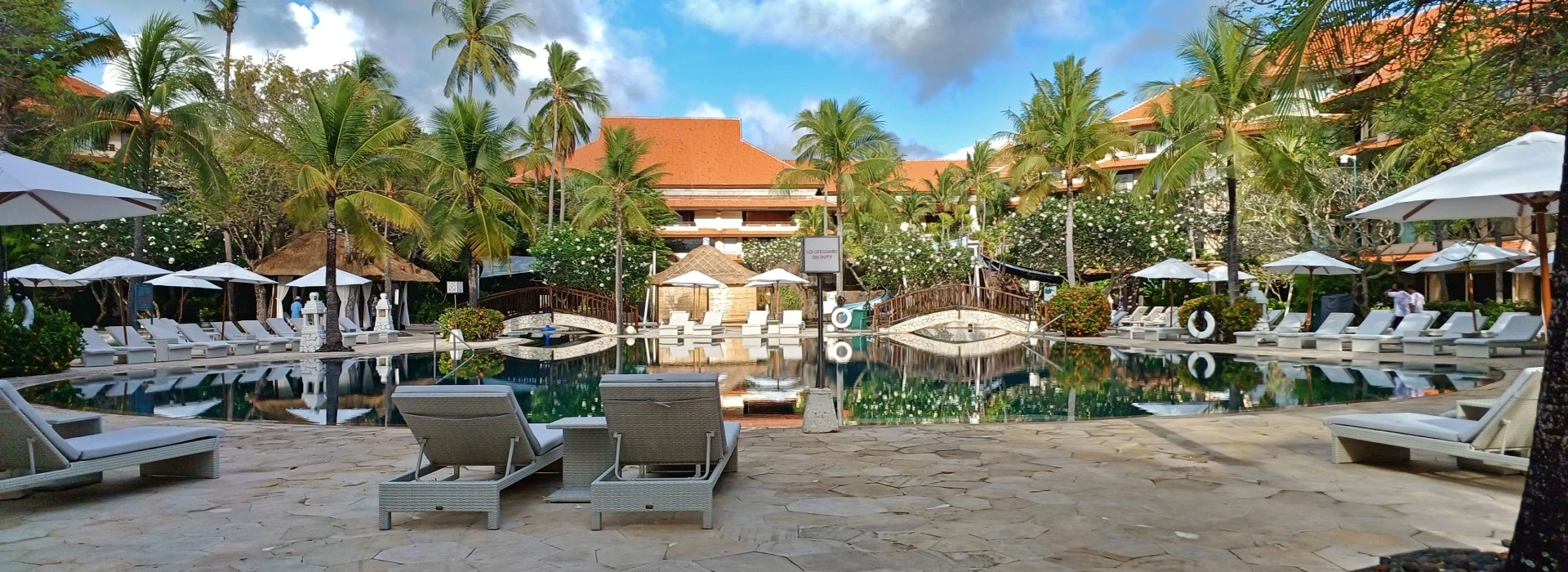
The Orchid Recovery is a private residential addiction and mental health treatment centre in Hang Dong District, Chiang Mai, for international English speaking adults. A single site, capped at 20 clients.
Programmes run four, eight or twelve weeks, opening with five to seven days of medical detox where the substance requires it, then residential treatment, then two months of aftercare once you are home. There is a full-time on-site psychiatrist and an arrangement with Chiang Mai Ram Hospital for anything needing hospital care.
Each substance has its own page with the specific withdrawal picture: alcohol, cocaine, heroin, benzodiazepines, prescription drugs. Where a mental health condition sits alongside the substance use, that is dual diagnosis.
Aftercare for someone returning to Manchester is remote, and it does not replace a local service. Reconnecting with community support in the city is part of the plan, not an admission of failure.
If you want to talk it through, we are here. If the free route in Manchester is the right answer for your situation, we will tell you that instead.
Sources
- OHID, Adult substance misuse treatment statistics 2024 to 2025
- NHS, Drug addiction: getting help
- Manchester City Council, Alcohol, drugs and substance use
- National Institute on Drug Abuse, Principles of Drug Addiction Treatment
- Trevisan LA and others, Complications of alcohol withdrawal: pathophysiological insights, Alcohol Health and Research World, 1998
- Pétursson H, The benzodiazepine withdrawal syndrome, Addiction, 1994
Frequently Asked Questions
Do you have a rehab centre in Manchester?
No. The Orchid Recovery has one facility, in Chiang Mai, Thailand. We have no UK site. This page exists because people in Manchester weigh up treatment abroad, not because we operate locally.
How long is the wait for free treatment in Manchester?
Nationally, 99% of people starting substance misuse treatment in England in 2024 to 2025 began within three weeks of referral. The constraint on the free route is that most of it is community based rather than residential, not that it is slow to access.
Is treatment in Thailand cheaper than private rehab in the UK?
Generally yes, often substantially, and the gap usually survives the cost of flights. Compared with free community treatment in Manchester it obviously is not, which is why this page puts that option first.
How do I get from Manchester to Chiang Mai?
There is no direct flight. Expect one stop through a Gulf hub or Bangkok, roughly 15 to 20 hours door to door. Do not book until after the clinical assessment, in case stabilising in the UK first turns out to be the safer sequence.
What happens when I come home?
Two months of aftercare are included, delivered remotely. It supports the transition but does not replace local support in Manchester, and reconnecting with a community service in the city is part of the plan rather than a fallback.
Can I be assessed before committing?
Yes, and you should be. The assessment is what establishes whether residential treatment abroad suits your situation at all. If it does not, we would rather say so at that point than after you have paid for a flight.
What does a programme cost, all in?
The residential fee starts at USD 10,900 for four weeks and includes two months of aftercare once you are back in Manchester. A longer stay is quoted to you directly. On top of that, budget for return flights, travel insurance that covers the treatment period, and any visa cost attached to your own passport.
How do I actually arrange it from Manchester?
Contact us by phone, WhatsApp or email and describe what has been happening. A clinical assessment comes next, and it decides whether treatment abroad suits you or whether stabilising in the UK first is the safer order. Only after that do we agree a start date, and only then should you book a flight out of Manchester Airport.