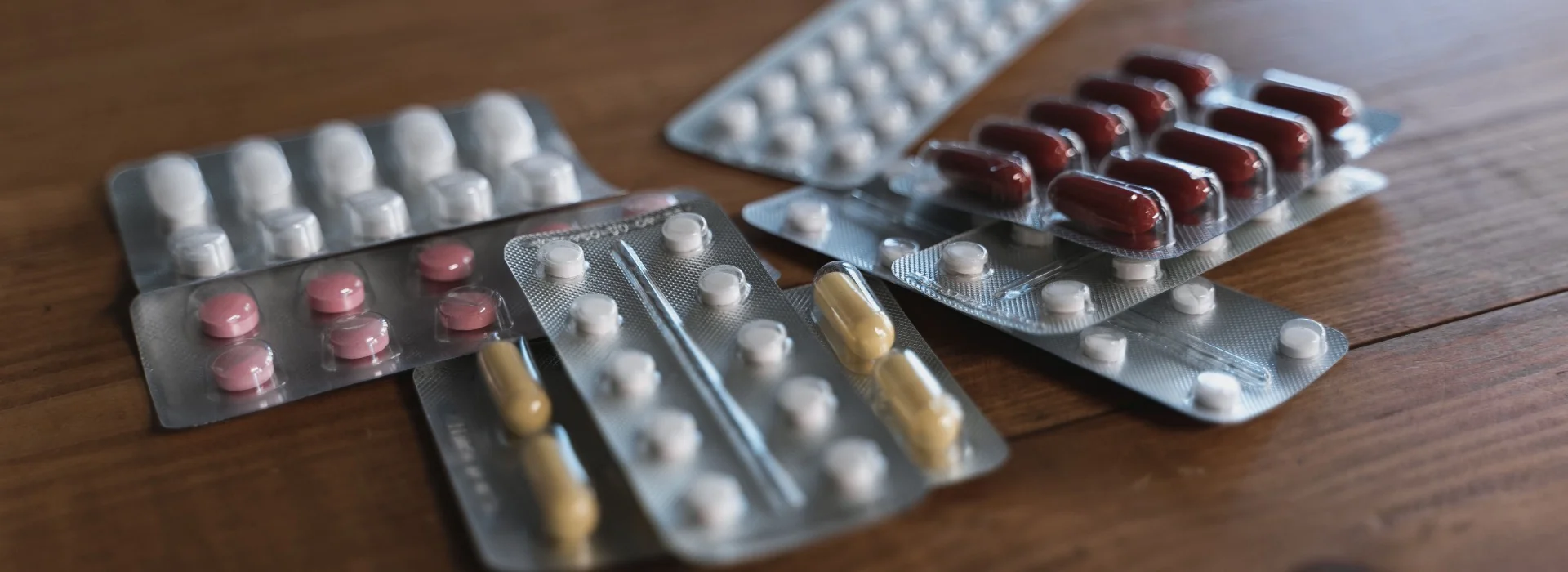
Most pages about a medicine and alcohol are, underneath, about the liver taking two hits at once. This one is not. Codeine and alcohol both slow breathing, and the licensed product information for codeine says so in the section reserved for genuine drug interactions.
That does not mean everyone who has a glass of wine after a codeine tablet is in danger. It does mean the caution has a different shape from most, and the wording is worth reading.
The same molecule, five documents, five different warnings
Every source below describes codeine. They do not say the same thing.
| Source | What it says about alcohol |
|---|---|
| NHS, codeine | “You can eat and drink normally while taking codeine, but it’s best not to drink alcohol because this can increase the risk of side effects.” |
| NHS, co-codamol for adults | “It’s best to stop drinking alcohol during the first few days of treatment until you see how co-codamol affects you. Drinking alcohol while you’re taking co-codamol can make you feel more sleepy. It can also increase the risk of serious side effects.” |
| Codeine phosphate patient leaflet, eMC | “Do not drink alcohol whilst taking Codeine Phosphate Tablets. Alcohol may increase the sedative effects of Codeine Phosphate Tablets and make you very sleepy.” |
| Codeine phosphate SmPC, section 4.5, interactions | “Alcohol, enhanced sedative and hypotensive effect, increased risk of respiratory depression” |
| Co-codamol pharmacy pack SmPC, section 4.5 | “The concomitant use of alcohol and opioids increases the risk of sedation, respiratory depression, coma and death because of additive CNS depressant effect.” |
The spread runs from “best not to” to “coma and death”, and both ends are current UK sources.
Our reading is that the NHS pages are written for someone taking a short course as prescribed, while the Summaries of Product Characteristics are written for prescribers and have to cover the whole population, including the people at the edges of it. Neither is wrong for its own reader. One detail is still worth naming: the word breathing appears in neither NHS answer. We are not saying the NHS understates the risk, only that those two sentences are silent on the mechanism, and a reader who sees only them comes away thinking the issue is drowsiness.
Why this counts as an interaction rather than additive strain
A useful test of how seriously a regulator takes a medicine with alcohol is where in the label the word alcohol appears. For many medicines it sits only under special warnings, a caution about two things being hard on the same organ. For codeine it appears in Section 4.5 of the Summary of Product Characteristics, the interactions section, with the effect spelled out: enhanced sedative and hypotensive effect, increased risk of respiratory depression.
The co-codamol pharmacy pack label gives the mechanism in its own words. The risk rises “because of additive CNS depressant effect”. That is its language, not ours.
The codeine label adds that opioids “can cause sleep-related breathing disorders including central sleep apnoea (CSA) and sleep-related hypoxemia”, and warns that codeine with “sedative medicines such as benzodiazepines or related drugs may result in sedation, respiratory depression, coma and death”. Alcohol sits in that category, which the co-codamol label states outright and the codeine label leaves implicit.
The part people miss: co-codamol is codeine
Co-codamol, as the NHS describes it, is “a mixture of 2 different painkillers, paracetamol and codeine”. It comes in more than one strength, and “you can buy the lowest strength from pharmacies but the higher strengths are only available on prescription”.
So someone can buy a box of painkillers over the counter, take them and have a drink, without ever handling anything they think of as an opioid. The NHS page describing what co-codamol is does not use the word opioid at all, though its questions page says codeine “belongs to a group of medicines called opioids”. That gap between how it is bought and how it is classified is our observation rather than any source’s finding.
The MHRA has been tightening this for years. Its guidance on over-the-counter painkillers containing codeine or dihydrocodeine narrowed the indication to “short term treatment of acute, moderate pain which is not relieved by paracetamol, ibuprofen or aspirin alone”, dropped the references to colds, flu, coughs and sore throats, capped non-prescription pack sizes, and required the front of the pack to carry an addiction warning alongside a limit on days of use. We do not print that day limit, because this page does not publish maximums.
There is a second alcohol problem in the same box, and it belongs to the paracetamol half. The co-codamol label states that “the hazard of overdose is greater in those with non-cirrhotic alcoholic liver disease”, and its overdose section lists regularly consuming alcohol in excess of recommended amounts among the things that leave someone less able to handle paracetamol. Our reading is that the over-the-counter version therefore carries two alcohol risks on two different organs.
CYP2D6, and why “I have done this before” is a weak test
Codeine does little by itself. The label explains that it “is metabolised by the liver enzyme CYP2D6 into morphine, its active metabolite”, and that if someone “is an extensive ultra-rapid metaboliser there is an increased risk of developing side effects of opioid toxicity even at commonly prescribed doses”.
Being a known ultra-rapid metaboliser is a contraindication to codeine outright, and the MHRA used the same reasoning to restrict codeine in children and to advise against it while breastfeeding.
How common is it? The label carries population estimates from separate studies, and the variation between populations is wide. None of those estimates tells a reader anything about themselves, and almost nobody has been tested.
The extension we draw, and it is ours rather than the label’s finding, is that personal experience is a poor safety instrument here. “I have had a drink on codeine before and been fine” tells you about the nights you remember, not about your enzyme status or what else was in your system.
The variation runs the other way too, which is worth publishing because it cuts against the alarm. People who lack the enzyme convert very little codeine to morphine and get an inadequate effect from it.
What the human evidence actually measured
We looked for a controlled study of alcohol plus codeine in people and could not find one. What exists is close but not the same drug.
A 2017 study in Anesthesiology by van der Schrier and colleagues gave twelve younger and twelve older opioid-naive volunteers an oxycodone tablet with a controlled ethanol infusion. Oxycodone alone reduced baseline minute ventilation, and adding ethanol at the higher concentration deepened that respiratory depression further. The authors concluded that “Ethanol together with oxycodone causes greater ventilatory depression than either alone, the magnitude of which is clinically relevant”, and that “Elderly participants were more affected than younger volunteers”.
The limitations are substantial. It is oxycodone, not codeine. It is twenty four opioid-naive volunteers. The alcohol was infused to a fixed blood concentration rather than drunk. Reading that finding across to codeine is our extension rather than the study’s, and we make it because codeine works through morphine at the same receptors.
What it supports is narrow and still useful. Alcohol and an opioid together depressed breathing more than the opioid alone, and age made it worse. It does not give anyone a threshold.
What an emergency looks like
The codeine label describes the general symptoms of opioid toxicity as “confusion, somnolence, shallow breathing, small pupils, nausea, vomiting, constipation and lack of appetite”, and the co-codamol label refers to circulatory and respiratory depression that “may be life-threatening and very rarely fatal”. In practice what matters is breathing that has become slow, shallow, noisy or irregular, and a person who cannot be roused.
If someone who has taken codeine or co-codamol and been drinking cannot be woken, call 999. Outside the UK, use your local emergency number. Do not wait to see whether they sleep it off, and do not assume the alcohol explains it.
Naloxone reverses opioid overdose, and UK regulations amended in 2024 widened who can supply take home naloxone without a prescription. If naloxone is present, emergency services should still be called.
One legal note, quoted rather than asserted. Codeine and morphine both appear on the UK list of drugs covered by drug driving law, which says you may drive after taking them if “you’ve been prescribed them and followed advice on how to take them by a healthcare professional” and “they are not causing you to be unfit to drive”. Alcohol is regulated separately, and that is a legal question rather than a clinical one.
When the combination is a pattern rather than an accident
Some people find this page after one frightening evening. Others because the mixture has become routine.
The codeine label is direct about where routine use leads: “Tolerance, physical and psychological dependence, and opioid use disorder (OUD) may develop upon repeated administration”, and the patient leaflet adds that repeated use “can also lead to dependence, abuse and addiction, which may result in life-threatening overdose”. The MHRA reclassified codeine linctus to prescription only in 2024 after finding it was “being used recreationally for its opioid effects”, citing a rise in annual deaths where codeine was involved from 88 in 2011 to 200 in 2021. Those are deaths where codeine was involved, not caused by codeine alone, and the update does not say how many also involved alcohol.
If you are wondering whether your own use has drifted, this page cannot settle it. Tell a clinician how much codeine you take and how much you drink. If everything is fine, you have lost nothing. If it is not, you have found out early.
Two things not to do alone. Do not stop prescribed codeine abruptly after regular use. And if you drink heavily and daily, do not stop drinking suddenly either, because the NHS states plainly that “it can be very dangerous to stop drinking suddenly if you’re dependent on alcohol”. Both are conversations for a doctor first.
Talking to us
The Orchid Recovery is a residential addiction and mental health treatment centre in Hang Dong District, Chiang Mai, Thailand, for international English speaking adults. If codeine and alcohol have become a combination you return to rather than stumbled into, our pages on opioid addiction treatment, prescription drug addiction treatment and medically supervised alcohol detox explain what treatment involves. Where both are in play, polysubstance use is the more relevant read. Our clinical team is listed here, and you can speak to us if it would help.
Most people reading this will not need a residential programme, which is the right outcome. If you only want to know whether your drinking has crept up, the early signs of alcohol dependence is a better start. We have also written about pregabalin and alcohol, where the sedation is the same problem.
Sources
- NHS, Codeine
- NHS, Taking codeine with other medicines and herbal supplements
- NHS, About co-codamol for adults
- NHS, Common questions about co-codamol for adults
- NHS, Alcohol misuse
- electronic Medicines Compendium, Codeine Phosphate Tablets BP, Summary of Product Characteristics
- electronic Medicines Compendium, Codeine Phosphate Tablets BP, Patient Information Leaflet
- electronic Medicines Compendium, Co-codamol Tablets (P), Summary of Product Characteristics
- MHRA, Over-the-counter painkillers containing codeine or dihydrocodeine
- MHRA, Codeine for cough and cold: restricted use in children
- MHRA, Codeine linctus: reclassification to prescription-only medicine
- GOV.UK, Supplying take home naloxone without a prescription
- GOV.UK, Drugs and driving: the law
- van der Schrier et al, Influence of Ethanol on Oxycodone-induced Respiratory Depression: A Dose-escalating Study in Young and Elderly Individuals, Anesthesiology 2017;126(3):534-542 (abstract retrieved from the NCBI PubMed record via E-utilities)
Where to take this if it is bigger than one question
Most people who reach the bottom of this page will close it, avoid the combination and never think about it again. That is the correct ending, and we are not going to argue anyone out of it.
A smaller group already knows the answer to the question above and has been putting off saying it out loud. If that is you, the first move is still a clinician who can see your record, because neither codeine nor heavy daily drinking should be stopped abruptly and unsupervised. If you would rather that clinician were somewhere other than home, we are one option. The Orchid Recovery is a 20-client centre in Chiang Mai, and our residential programme is where opioid addiction treatment and supervised withdrawal actually happen, with two months of aftercare included afterwards.
Speak to us on +66 985 245 093, by phone or on WhatsApp, whichever is less awkward. Write to admissions@orchidrecoverythailand.com if it is easier to type than to say. Ask anything, including whether you need us at all.
Frequently Asked Questions
Can you drink alcohol with codeine?
UK sources do not agree on how firmly to say no. The NHS says it is best not to drink alcohol with codeine because it can increase the risk of side effects. The patient leaflet supplied with codeine tablets says do not drink alcohol at all while taking them. The prescriber label goes further and lists alcohol as an interaction that increases the risk of respiratory depression. Ask the clinician who prescribed it.
What happens if you mix codeine and alcohol?
Both are central nervous system depressants, so sedation increases and breathing can become slower and shallower. The co-codamol product label describes the risk of sedation, respiratory depression, coma and death rising because of an additive effect between the two. The severity depends on how much of each, on other sedating medicines, on age, on lung and liver health, and on how quickly your body converts codeine to morphine.
Does co-codamol carry the same alcohol risk as codeine?
Co-codamol contains codeine, so the respiratory risk is the same in kind. The lowest strength can be bought from a pharmacy without a prescription, and our observation is that many people do not register that as taking an opioid. Co-codamol also contains paracetamol, and its label warns that the hazard of overdose is greater in people with alcohol-related liver disease, so there is a second, separate alcohol risk in the same tablet.
How much codeine and alcohol is dangerous?
No source will give you that number and neither will we. The labels do not define a safe combination, and the amount that matters differs with body size, tolerance, age, other sedating medicines, respiratory conditions, liver function and genetic variation in the enzyme that converts codeine to morphine. Anyone offering you a threshold from a web page is guessing.
Why does codeine affect some people more strongly?
Codeine is converted into morphine by an enzyme called CYP2D6, and people vary in how fast they do it. The product label states that ultra-rapid metabolisers face an increased risk of opioid toxicity even at commonly prescribed amounts, which is why being a known ultra-rapid metaboliser rules codeine out altogether. Most people have never been tested and do not know which group they fall into.
What are the warning signs after codeine and alcohol?
The product labels describe confusion, drowsiness, shallow breathing and small pupils among the general symptoms of opioid toxicity. In practice the signs that matter are breathing that is slow, shallow, noisy or irregular, and someone who cannot be woken. If that happens, call 999, or your local emergency number outside the UK. Do not assume the alcohol alone explains it.
I take codeine every day and drink most nights. What should I do first?
Speak to a clinician and give them the real figures rather than the tidy ones, because both substances change what is safe to do next. Do not stop either abruptly on your own. Stopping codeine suddenly after regular use causes withdrawal, and the NHS warns that stopping alcohol suddenly can be very dangerous if you are dependent on it. Supervised is the safer route for both.
How does someone actually start treatment, and what happens first?
Usually with a conversation rather than a booking. We ask what you take, how much you drink and what your health is like, and a clinician then decides whether an admission is appropriate and what the opening days would need to involve. Programmes run four, eight or twelve weeks. If the answer is that you do not need us, we will say so.