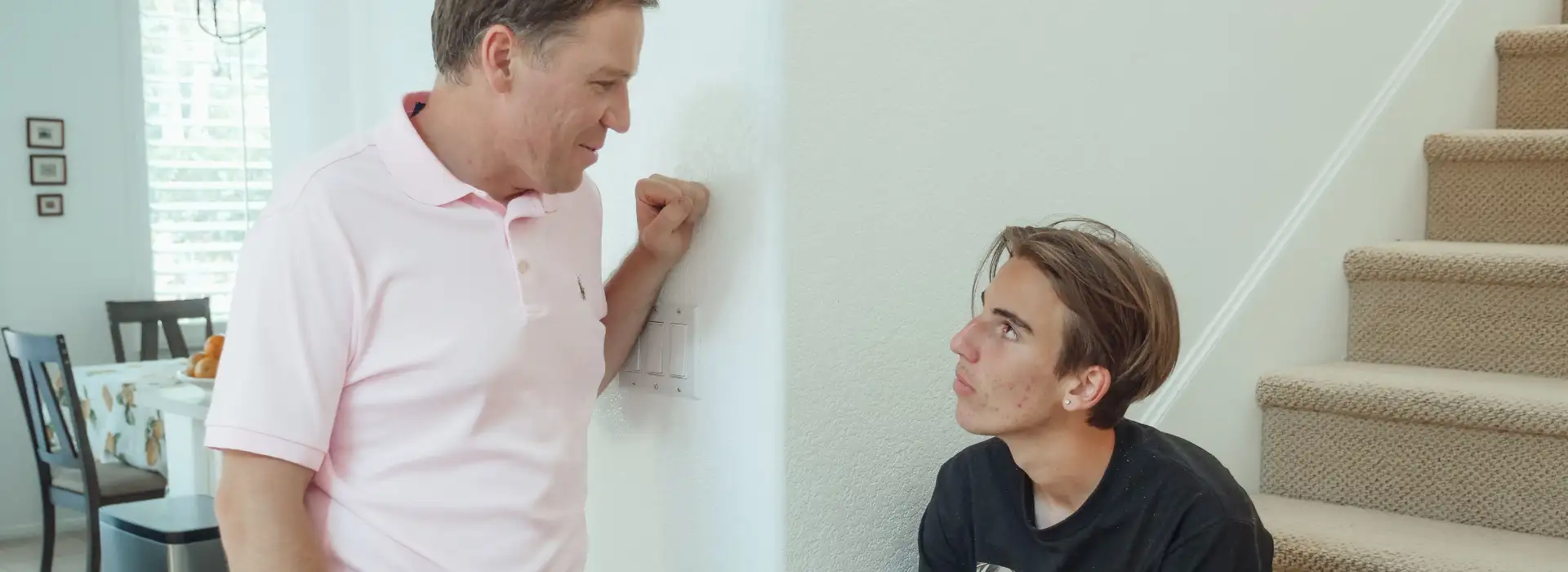
Group therapy for addiction is a structured clinical intervention in which a trained therapist works with several people simultaneously, using the shared experience of the group as a therapeutic tool. In addiction treatment, it addresses not just substance use but the isolation, shame, and relationship patterns that often sustain it. Most residential programmes place group therapy at the centre of daily treatment, not as an optional add-on, because the evidence supports doing so.
This guide explains what group therapy involves in practice, the different types you are likely to encounter in a residential programme, and why the residential setting changes what group therapy can achieve.
What Group Therapy for Addiction Actually Is
Group therapy is not the same as a 12-step meeting or a peer support circle, though all three can play a role in recovery. The defining feature of group therapy is professional clinical leadership: a trained therapist or counsellor facilitates the session with clear therapeutic goals, using the group process itself as a vehicle for change.
Where a 12-step meeting is peer-led and follows a specific programme structure, and where a support group focuses primarily on shared experience, group therapy in a clinical setting draws on established psychological frameworks, whether cognitive-behavioural, psychodynamic, or motivational. Sessions are held in a contained therapeutic space, with a contract around confidentiality, attendance, and participation.
In residential addiction treatment, group therapy typically runs daily or several times per week, and forms the backbone of the therapeutic programme alongside individual sessions.
Why Group Therapy Is Central to Addiction Treatment
Addiction rarely exists in isolation. It tends to develop alongside, and then feed, two experiences that make recovery harder: isolation and shame. The person using substances often withdraws from relationships, conceals the extent of their use, and carries a private burden of self-judgement. These patterns reinforce themselves over time.
Group therapy addresses both directly. Sitting in a room with others who have had similar experiences, and who are at different stages of recovery, delivers something a one-to-one session cannot: the direct, lived evidence that you are not uniquely broken.
According to SAMHSA’s Treatment Improvement Protocol TIP 41, group therapy and addiction treatment are “natural allies.” The therapeutic forces that make groups effective, including affiliation, peer accountability, shared confrontation, and the instillation of hope, map directly onto the relational and emotional deficits that addiction produces.
When a person observes someone further along in recovery describing how they rebuilt their life, that is not information they could receive from a clinician in the same way. When the group, rather than the therapist, confronts a member’s minimisation of their substance use, it carries a different weight. The group speaks with what SAMHSA describes as “the combined authority of people who have shared common experiences.”
This is why residential programmes built on the evidence do not treat group therapy as supplementary. It is structural.
The Five Main Types of Group Therapy Used in Addiction Treatment
Addiction treatment uses several distinct forms of group therapy, each serving a different therapeutic purpose. In a residential programme, you are likely to encounter more than one. Understanding what each involves removes some of the uncertainty about what the days will look like.
| Group Type | What It Involves | When It Is Most Useful |
|---|---|---|
| Psychoeducational | Structured sessions teaching about addiction mechanisms, consequences, and recovery processes. Led by a facilitator using presentations or guided discussion | Early treatment, or for anyone who benefits from understanding the neuroscience and behavioural patterns of their condition |
| Skills development | Practical group work building specific capabilities: managing cravings, refusal skills, emotional regulation, problem-solving. Often structured over 8-10 weeks | Early to mid-recovery; high value for people whose coping repertoire has narrowed around substance use |
| Cognitive-behavioural / problem-solving | Structured sessions examining how thoughts, beliefs, and perceptions drive addictive behaviour. Group members work through distorted thinking and develop new responses together | Particularly useful in early recovery when automatic thought patterns are most active |
| Support groups | Ongoing groups providing emotional sustenance and peer accountability. Members share challenges and practical approaches to maintaining sobriety | Mid to later treatment and aftercare; less structured than skills or psychoeducational groups |
| Interpersonal process groups | Sessions exploring the here-and-now dynamics between group members, examining relational patterns that contribute to addiction. Grounded in psychodynamic theory | Mid to later treatment; high value for people with complex relational histories or co-occurring mental health presentations |
According to SAMHSA TIP 41’s chapter on group types, residential programmes typically combine several of these models within a weekly timetable rather than relying on a single format. The combination matters: psychoeducation builds the cognitive framework, skills development provides practical tools, and process groups address the deeper relational patterns.
Process Groups: The Heart of Residential Group Therapy
Of all the group types, interpersonal process groups tend to generate the most questions and, for many people, produce the deepest therapeutic shifts.
A process group does not follow a structured curriculum. The therapist facilitates rather than teaches, and the focus is on what is happening between members in the room, in the present moment, rather than on external events or abstract concepts. If someone in the group is noticed withdrawing, or if a pattern of deflection with humour becomes visible, the therapist might name it and invite the group to explore it together.
This is deliberate. Psychiatrist Irvin Yalom, whose research underpins much of how process groups are conducted, identified a set of curative factors that explain why group therapy works. These include universality (the relief of discovering you are not alone), instillation of hope (seeing others recover), altruism (the experience of being genuinely helpful to others), and the corrective recapitulation of family dynamics (the group providing a safer space to replay and rework relational patterns from earlier life).
For many people with addiction, the relational injuries that precede or accompany substance use are significant. The process group provides a structured, supervised environment in which those patterns can surface and be addressed without the consequences they would carry in ordinary life.
Psychoeducation Groups: Understanding Your Addiction
Psychoeducation groups are often the first type of group therapy a person encounters in residential treatment. They are structured, content-led sessions designed to expand understanding of what addiction is and how it works.
Typical topics include the neuroscience of addiction and the reward pathway, how dependence develops, the role of triggers and cravings, the biology of withdrawal, and the relationship between mental health and substance use. The goal is not academic knowledge for its own sake. Understanding why cravings feel physically compelling, or why certain environments reliably trigger the urge to use, equips a person to respond differently rather than to react automatically.
Psychoeducation also does something less tangible but equally important. It reframes addiction as a medical and behavioural condition rather than a moral failing. For many people, shame has been a barrier to seeking help and a driver of continued use. Understanding the condition through a clinical lens, in a group of others who are going through the same process, begins to dissolve that shame.
12-Step Facilitation: Linking Treatment to Community
Twelve-Step Facilitation (TSF) is a clinician-led, evidence-based intervention that is distinct from simply attending Alcoholics Anonymous or Narcotics Anonymous meetings. In TSF, a trained therapist works systematically with a group to explore the principles and practices of 12-step recovery, helps members engage with and overcome resistance to 12-step involvement, and actively supports the transition from residential treatment into the mutual-help community.
The evidence base for TSF is substantial. Project MATCH, a landmark randomised controlled trial conducted by NIAAA involving more than 1,700 participants, found that outpatients who received TSF were more likely to remain completely abstinent in the year following treatment than those who received cognitive-behavioural therapy or Motivational Enhancement Therapy. The difference was most pronounced for participants with lower levels of psychiatric comorbidity.
A 2020 Cochrane review by Kelly and colleagues concluded that AA and TSF were better than other well-established treatments at facilitating continuous abstinence and remission, reporting continuous abstinence rates of 45.7% for AA/TSF versus 36.2% for CBT across the studies examined. The review’s authors noted that the evidence points in a consistent direction even as they acknowledged variation across individual studies.
The clinical value of TSF in a residential context extends beyond its abstinence outcomes. It builds a bridge between the contained world of residential treatment and the unstructured world that follows. Residential programmes end; 12-step communities do not.
The Evidence Base for Group Therapy in Addiction Treatment
Research on group therapy for addiction is strong in direction, even if the volume of large randomised trials remains smaller than for individual therapy. SAMHSA TIP 41, the most comprehensive government-level clinical reference on this topic, concludes that group therapy demonstrates efficacy comparable to individual therapy, and is sometimes more beneficial.
A systematic review examining peer support groups in addiction treatment, published in the journal Substance Abuse and Rehabilitation, found that participants receiving peer mentorship alongside group-based support were three times as likely to attend their treatment appointments compared to those receiving standard care alone. The review also found improvements in self-efficacy, reductions in craving and negative affect, and enhanced quality of life. The authors acknowledged that the field would benefit from larger, more methodologically rigorous studies, a standard caution that does not undermine the direction of the evidence.
A 2021 review in the journal Substance Abuse Treatment, Prevention, and Policy described group treatments for drug use disorders as “potentially cost-effective, widely disseminable, and adaptable to a variety of populations,” while noting that group approaches have historically received less research attention than individual treatments.
What the evidence collectively supports is this: the therapeutic mechanisms that group settings activate, including peer accountability, hope, confrontation from shared experience, and reduced isolation, are genuine, clinically meaningful, and complementary to what individual therapy provides.
What to Expect in a Group Therapy Session
If you have never attended group therapy before, uncertainty about what will happen is normal. Most people imagine they will be required to speak about private matters in front of strangers from day one. That is not how it works in practice.
A typical group therapy session in a residential programme runs between 60 and 90 minutes and involves between 6 and 12 participants. The therapist or co-therapists facilitate but do not dominate. In skills-based or psychoeducational sessions, there may be structured content to work through. In process groups, the conversation emerges from what is happening in the room.
Confidentiality is foundational. What is shared in the group stays within it, and this is usually established explicitly as a contract at the outset of treatment. You are not required to share anything you are not ready to share. Most people find that as trust builds over the first week or two, the impulse to participate comes naturally.
In the early stages, listening is enough. Witnessing others at different points in their recovery, hearing how they describe their experience, and recognising yourself in what they say, is itself therapeutic. Many people report that they found their first few sessions more useful than they expected, precisely because the experience of universality, of not being alone in this, arrived quickly.
Group Therapy in a Residential Setting vs Outpatient
Group therapy happens in both residential and outpatient settings, but the therapeutic experience is structurally different.
In an outpatient setting, group members attend sessions once or twice per week and return to their home environment, relationships, and triggers between sessions. The group cohesion builds slowly, and the person must manage what arises in sessions without immediate support around them.
In residential treatment, group sessions happen daily. The group members live in proximity to each other, share meals, and interact outside of formal sessions. This builds cohesion and trust far more quickly than weekly outpatient attendance. Crucially, what surfaces in a group session can be processed with a therapist or counsellor the same day, through individual sessions, informal check-ins, or the structured holistic activities that fill the rest of the timetable.
The residential setting also removes the triggers that can make processing difficult. Geographic separation from the home environment, from the social network and the supply chain, means the nervous system is operating from a different baseline. The therapeutic work that group sessions require becomes more accessible when the person is not simultaneously managing the stresses and exposures of daily life outside treatment.
Group Therapy at The Orchid Recovery, Chiang Mai
The Orchid Recovery is a boutique residential addiction and mental health treatment programme in the Hang Dong District of Chiang Mai, Thailand. We work with a maximum of 20 international clients at any one time, which means every group session is genuinely intimate rather than institutional.
Our residential programme integrates several forms of group therapy within a structured weekly timetable, alongside individual therapy, psychiatric review, and holistic activities. The combination is intentional: different group formats address different dimensions of recovery, and none works in isolation.
Psychoeducational and skills-based group sessions are facilitated by Hossameldin Elzobidy (Sam), our cognitive-behavioural therapist, who holds an ACPC qualification from Walden University, USA. Sam’s groups address the cognitive and behavioural patterns driving addiction, building practical tools for managing cravings, identifying triggers, and developing new responses.
Trauma-informed group work is led by Mrs. Yuri Cardozo, an EMDRIA Level 3 credentialled therapist and member of the British Psychological Society. For clients presenting with co-occurring trauma, group work is integrated with individual trauma therapy, including our trauma treatment pathway and PTSD treatment programme.
Psychiatric oversight across all group and individual work is provided by Dr. Suttipan Takkapaijit, our CEO and full-time on-site psychiatrist (MD, Thai medical license 13333). For clients with dual-diagnosis presentations, Dr. Suttipan’s full-time presence means the clinical picture is held holistically from the outset.
The boutique scale matters specifically for group therapy. With a maximum of 20 clients, group sessions draw from a small, stable community. Members are more likely to know each other, trust builds faster, and the group process develops more depth than in larger institutional settings. There are no rotating cohorts or strangers cycling in weekly.
Our programmes are available for 4, 8, or 12 weeks. The 12-week programme in particular allows group cohesion to develop over time and supports deeper interpersonal process work. Group therapy also prepares clients for the peer community available after residential treatment ends. The two months of complimentary aftercare we provide includes ongoing connection with the recovery community you have started to build.
For those researching what therapy looks like inside a residential programme, our individual therapy page explains how one-to-one sessions run alongside group work, and our family therapy programme covers how families and partners can be involved in the process.
Thinking about residential treatment? Find out what group therapy looks like at Orchid Our small admissions team in Chiang Mai speaks with international clients every week. We can walk you through what the programme involves, how group and individual therapy fit together, and answer any questions you have, with no pressure to commit to anything. Speak to our admissions team: /contact-us/
Sources
- SAMHSA — “Substance Abuse Treatment: Group Therapy (TIP 41).” NCBI Bookshelf. https://www.ncbi.nlm.nih.gov/books/NBK64220/
- SAMHSA TIP 41 — “Groups and Substance Abuse Treatment” (Chapter 1). https://www.ncbi.nlm.nih.gov/books/NBK64223/
- SAMHSA TIP 41 — “Types of Groups Commonly Used in Substance Abuse Treatment” (Chapter 2). https://www.ncbi.nlm.nih.gov/books/NBK64214/
- National Institute on Alcohol Abuse and Alcoholism (NIAAA) — “NIAAA Reports Project MATCH Main Findings.” https://www.niaaa.nih.gov/news-events/news-releases/niaaa-reports-project-match-main-findings
- Kelly J.F. et al. — “Alcoholics Anonymous and 12-Step Facilitation Treatments for Alcohol Use Disorder: A Distillation of a 2020 Cochrane Review for Clinicians and Policy Makers.” Alcohol and Alcoholism / PMC. https://pmc.ncbi.nlm.nih.gov/articles/PMC8060988/
- Tracy E.M., Wallace S.P. — “Benefits of peer support groups in the treatment of addiction.” Substance Abuse and Rehabilitation (2016). PMC5047716. https://pmc.ncbi.nlm.nih.gov/articles/PMC5047716/
- Linardon J. et al. — “A review of research-supported group treatments for drug use disorders.” Substance Abuse Treatment, Prevention, and Policy (2021). https://link.springer.com/article/10.1186/s13011-021-00371-0
Frequently Asked Questions
What is group therapy for addiction?
Group therapy for addiction is a clinician-led treatment in which a trained therapist works with several people simultaneously, using peer interaction as a therapeutic tool. It is distinct from 12-step meetings and peer support groups, which are not clinically facilitated. In addiction treatment, group therapy draws on psychological frameworks including cognitive-behavioural, psychodynamic, and psychoeducational approaches to address the cognitive, emotional, and relational dimensions of recovery.
How many people are usually in an addiction group therapy session?
Most group therapy sessions in residential addiction treatment involve between 6 and 12 participants. Smaller groups, such as those in boutique residential programmes, tend to build cohesion and trust more quickly, which allows the group process to develop depth. Sessions typically run between 60 and 90 minutes.
Is group therapy mandatory in residential addiction treatment?
In most residential programmes, group therapy is a core part of the treatment structure rather than an optional activity, because it is one of the most clinically supported components of residential care. You are not required to share anything you are not ready to share in early sessions, and most people find that the pressure to participate diminishes significantly once they experience the confidentiality and safety of the group environment.
What is the difference between a process group and a psychoeducation group?
A psychoeducation group is structured and content-led: the therapist presents material on addiction, neuroscience, triggers, and recovery, and members discuss it together. A process group has no fixed curriculum: the therapist facilitates discussion of what is happening between members in the room, in the present, to surface and address relational patterns that contribute to addiction. Both serve different purposes and residential programmes typically offer both within the same treatment week.
Is group therapy as effective as individual therapy for addiction?
According to SAMHSA's Treatment Improvement Protocol TIP 41, the most comprehensive government clinical reference on this topic, group therapy demonstrates efficacy comparable to individual therapy for addiction, and is sometimes more beneficial. The mechanisms are different: individual therapy offers depth and privacy; group therapy offers peer accountability, hope instillation, and the experience of universality that one-to-one sessions cannot replicate. Most evidence-based residential programmes use both in parallel.
What is 12-Step Facilitation and how does it differ from attending AA?
Twelve-Step Facilitation (TSF) is a clinician-led, evidence-based therapy that works systematically through the principles and practices of 12-step recovery and actively supports engagement with mutual-help organisations such as AA or NA. It is not the same as simply attending meetings. Project MATCH, a landmark NIAAA-funded trial of over 1,700 participants, found that outpatients receiving TSF were more likely to remain completely abstinent in the year following treatment than those receiving cognitive-behavioural therapy or motivational enhancement therapy.
How does group therapy in a residential programme prepare you for life after treatment?
Group therapy in a residential programme does two things that carry into life after treatment. First, it builds practical skills for managing cravings, navigating relationships, and maintaining recovery under pressure. Second, it introduces the experience of a peer community in recovery, which reduces the isolation that often drives relapse. Many people leave residential treatment having formed the strongest relationships of their recovery, alongside being connected to 12-step or aftercare communities that continue the support.