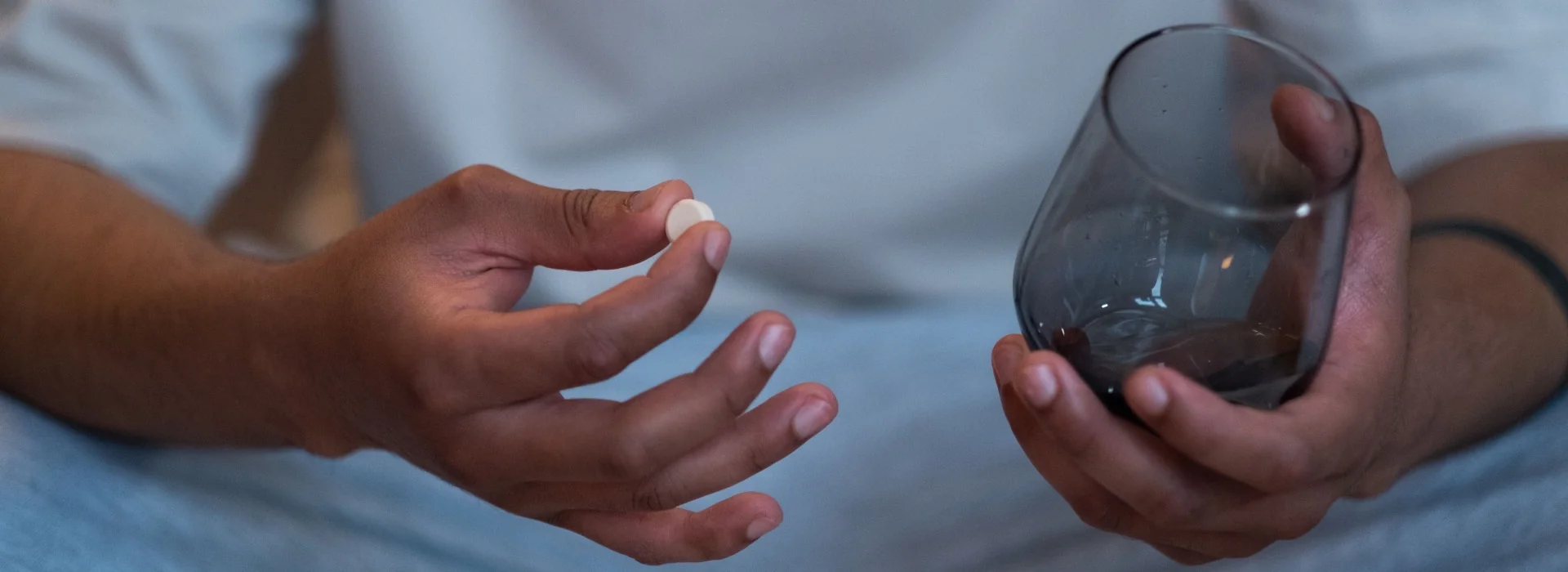
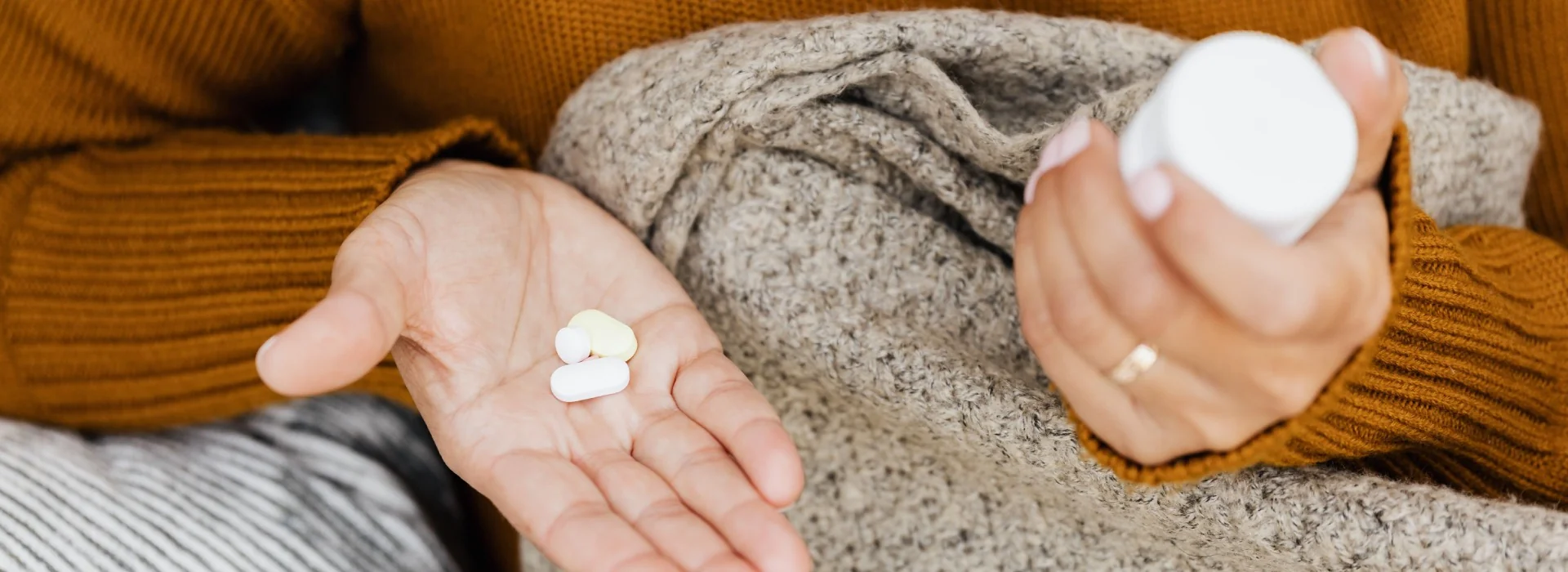
Do not drink alcohol while you are taking diazepam. The NHS is short about it: “Do not drink alcohol or grapefruit juice while taking diazepam as it can increase the risk of side effects.” The UK product label is less short. Its overdose section says the effects “are more severe when taken with centrally-acting drugs, especially alcohol, and in the absence of supportive measures, may prove fatal.”
There is a second half most pages leave out, and leaving it out is how people get hurt. Diazepam is licensed in the UK to treat acute alcohol withdrawal. The drug that is dangerous with alcohol in your bloodstream is also a first-line medicine for coming off alcohol, under supervision. Both are true at once, and neither is a reason to get hold of diazepam and run your own withdrawal with it.
Six UK documents, and the gap between two of them
| Document | What it says about alcohol |
|---|---|
| NHS, diazepam | “Do not drink alcohol or grapefruit juice while taking diazepam as it can increase the risk of side effects” |
| SmPC section 4.4, warnings for prescribers | Concomitant use with alcohol “should be avoided”, with the potential for “severe sedation, clinically relevant respiratory and/or cardio-vascular depression” |
| SmPC section 4.5, interactions | “Diazepam should not be used together with alcohol (CNS inhibition enhanced sedative effects: impaired ability to drive/ operate machinery)” |
| SmPC section 4.9, overdose | Effects “are more severe when taken with centrally-acting drugs, especially alcohol, and in the absence of supportive measures, may prove fatal” |
| Patient leaflet in the same pack | “Do not drink alcohol while you are taking Diazepam Tablets. Alcohol may increase the sedative effects of Diazepam Tablets and make you very sleepy.” |
| MHRA Drug Safety Update, January 2026 | Strengthened warnings on dependence, addiction, tolerance and withdrawal. Alcohol is not addressed in the professional advice |
The fifth row is the one to stare at. The leaflet folded into the box is the mildest description in the set, and the only one most people will ever read. In that same leaflet, the opioid warning is not mild: taking diazepam with opioids “increases the risk of drowsiness, difficulties in breathing (respiratory depression), coma and may be life-threatening.”
Our observation is that one mechanism is being described in two very different registers. The leaflet is not wrong, but “very sleepy” and “may prove fatal” are two audiences being told about the same thing, and if the paper in the box is your only source, you have the smaller version.
Why breathing is the thing that fails
Diazepam is a benzodiazepine. The StatPearls chapter on the NIH bookshelf describes it binding “at an allosteric site at the interface between the alpha and gamma subunits on GABA-A receptor chloride ion channels”, which increases how often those channels open and makes neurons less likely to fire. Alcohol, among other mechanisms, acts on the same GABA pathways. Two substances damping the same system do not take turns.
The label’s contraindications include respiratory depression, severe respiratory insufficiency, acute pulmonary insufficiency and sleep apnoea. Those are states diazepam must not be given in, and broadly what a heavy drinking session produces.
StatPearls also notes that “In the case of single-agent diazepam overdose, symptoms manifest as CNS depression and are very rarely fatal”, while overdose in adults “frequently involves the co-ingestion of other CNS depressants, which work synergistically to increase toxicity.” Put simply, alcohol may exacerbate the effects of a diazepam overdose.
Is there a safe amount, and is there a safe gap
No UK source publishes a threshold below which this combination becomes acceptable, and that absence is the answer rather than an oversight. The risk is greater at higher amounts, and there is no established safe level at the low end either.
The second question sounds responsible, which is what makes it dangerous: how long after a dose can you drink? Diazepam is long acting, it breaks down into an active substance that lasts considerably longer again, and it accumulates with repeated use. We have deliberately not printed those durations, because the only thing a reader can do with an hours figure is build a waiting window from it, and no source supports one. Where you stand is a conversation with your prescriber or a pharmacist, not an arithmetic problem.
What the UK death figures show, and what they cannot
The Office for National Statistics reported that among drug poisoning deaths registered in England and Wales in 2024, diazepam was mentioned on 302 death certificates. The same bulletin says “over half of these deaths involve more than one substance, so it is not possible to identify which was primarily responsible”. Alcohol appears nowhere in that list of substances.
National Records of Scotland does count alcohol. In Scotland in 2024, benzodiazepines were implicated in 574 drug misuse deaths, or 56 per cent, alcohol in 97, and more than one drug in 80 per cent of all drug misuse deaths. Scotland also publishes the finding that undercuts its own headline: “the vast majority of drug misuse deaths which implicate a benzodiazepine involve street benzodiazepines.”
Two readings follow, both ours rather than theirs. First, the large benzodiazepine totals are mostly not prescribed diazepam, so quoting them as the risk of a prescription is wrong. Tablets bought as diazepam are frequently not diazepam, so whoever takes them with a drink does not know what they are combining. Second, neither series cross-tabulates diazepam against alcohol, so we could not source a UK figure for the two together and will not estimate one. A missing number is not evidence that the combination is rare.
The uncomfortable half: diazepam is a treatment for stopping alcohol
The UK licence for diazepam includes “symptomatic treatment of acute alcohol withdrawal”, and the patient leaflet says the same. The UK clinical guidelines for alcohol treatment go further: “benzodiazepine reducing regimens are the standard pharmacological treatment of choice to manage withdrawal from alcohol”, and “chlordiazepoxide or diazepam are the most commonly used benzodiazepines.”
The same drug appears twice, once as a danger and once as a treatment. The difference is not the molecule. The treatment version is a planned reducing regimen, chosen against assessed severity of dependence and withdrawal history, in a setting chosen for the same reasons, with “regular skilled monitoring of symptoms and of the effects of medication” as “an essential component of care”, aimed at preventing delirium tremens. The dangerous version is tablets and a drink.
None of that makes unmanaged alcohol withdrawal the safer option. The NHS states plainly that “it can be very dangerous to stop drinking suddenly if you’re dependent on alcohol”, and lists seizures and hallucinations among withdrawal symptoms. Its instruction is not to be braver. It is: “get medical help before you try to stop drinking.”
This is the sentence the page exists for. If you are drinking dependently, stopping on your own and self-medicating with diazepam you obtained yourself are both bad answers to a real danger, and there is a third that is neither. The leaflet is blunt about the second: “benzodiazepines should only be used by those they are prescribed for. Do not give your medicine to anyone else”, and “overuse and misuse can lead to overdose and/or death.”
One more thing we noticed. The NHS page on alcohol treatment names acamprosate, naltrexone and disulfiram, and no withdrawal medicine at all. Our reading is that the public material routes you to a clinician rather than to a drug name on purpose, and this page does the same.
What an emergency looks like
The label describes overdose as drowsiness, slurred speech, unsteadiness, profound sleep, muscle weakness and slow heartbeat, with severe cases producing “coma, areflexia, cardiorespiratory depression and apnoea”. The NHS lists “difficulty breathing (slower, more shallow breaths)” as a side effect needing urgent medical attention.
What matters in practice is breathing gone slow, shallow or irregular, and a person who cannot be roused. If that is what you are looking at after diazepam and drinking, call 999. Outside the UK, use your local emergency number. Stay with them, and if they are breathing, put them in the recovery position while you wait. Tell the call handler exactly what was taken and that alcohol is involved. Do not decide they will sleep it off, and do not assume the drink explains it.
The legal position, quoted rather than asserted
Diazepam is listed by the Home Office as Class C, Schedule 4 Part I. For Class C drugs, gov.uk gives possession as “up to 2 years in prison, an unlimited fine or both” and supply and production as “up to 14 years in prison, an unlimited fine or both”. Passing your own tablets to someone else is supply. Diazepam is also named in drug driving law, which sets specified blood limits alongside a defence for anyone who has “been prescribed them and followed advice on how to take them by a healthcare professional”. These are statements of law quoted from their sources, not legal advice.
Talking to us
The Orchid Recovery is a residential addiction and mental health treatment centre in Hang Dong District, Chiang Mai, Thailand, for international English speaking adults.
If diazepam and alcohol have become a combination you return to rather than one you stumbled into, the relevant reading is benzodiazepine addiction treatment, or Valium addiction treatment if the tablets are branded, alongside medically supervised alcohol detox and alcohol addiction treatment. Where both are in play, polysubstance use is the closer description. Our clinical team is listed here, and you can speak to us if it would help.
Most people reading this will not need a residential programme, and that is the right outcome. If the live question is whether you can come off alcohol at home, read that on its own terms first. We have also written about pregabalin and alcohol, where the sedation problem is the same shape.
Sources
- NHS, Diazepam
- NHS, Alcohol misuse: treatment
- electronic Medicines Compendium, Diazepam 5 mg Tablets, Summary of Product Characteristics
- electronic Medicines Compendium, Diazepam 2 mg, 5 mg and 10 mg Tablets, patient information leaflet
- MHRA Drug Safety Update, Improving information supplied with gabapentinoids, benzodiazepines and z-drugs, January 2026
- UK clinical guidelines for alcohol treatment, chapter 10: pharmacological interventions
- Office for National Statistics, Deaths related to drug poisoning in England and Wales: 2024 registrations
- National Records of Scotland, Drug-related deaths in Scotland, 2024
- Home Office, List of most commonly encountered drugs currently controlled under the misuse of drugs legislation
- GOV.UK, Drugs penalties
- GOV.UK, Drug driving law
- StatPearls, Diazepam, NCBI Bookshelf
Frequently Asked Questions
Can you drink alcohol while taking diazepam?
No. The NHS says do not drink alcohol while taking diazepam, and the UK product label says concomitant use with alcohol should be avoided because it can increase sedation and cause clinically relevant respiratory and cardiovascular depression. No UK source sets a threshold below which the combination becomes acceptable. If you are prescribed diazepam, raise alcohol with your prescriber rather than deciding alone.
What happens if you mix diazepam and alcohol?
Both damp down the same braking system in the brain, so sedation, confusion and loss of coordination arrive faster and go deeper than either would produce alone. The serious outcome is breathing that becomes slow and shallow. The product label states that the effects of an overdose are more severe when taken with centrally acting drugs, especially alcohol, and without supportive measures may prove fatal.
How long after taking diazepam can I drink alcohol?
There is no published safe waiting period, and we have deliberately not printed one. Diazepam is long acting, it is broken down into an active substance that lasts considerably longer again, and it accumulates with repeated use, so an interaction can still occur well after a dose. Ask the prescriber or a pharmacist who knows what you take and how often.
Can mixing diazepam and alcohol kill you?
Yes. A diazepam overdose on its own is very rarely fatal, but alcohol may exacerbate the effects of a diazepam overdose, and fatal cases so often involve more than one depressant. If someone who has taken diazepam and been drinking cannot be woken, call 999, or your local emergency number outside the UK.
Is diazepam used to treat alcohol withdrawal?
Yes, and this confuses people badly. Diazepam is licensed in the UK for symptomatic treatment of acute alcohol withdrawal, and UK clinical guidelines name chlordiazepoxide and diazepam as the most commonly used benzodiazepines for it. That is a planned reducing regimen with skilled monitoring, chosen against assessed severity. It is not a reason to obtain diazepam and treat yourself.
Is it dangerous to stop drinking without help?
It can be. The NHS states that it can be very dangerous to stop drinking suddenly if you are dependent on alcohol, and lists seizures and hallucinations among withdrawal symptoms. Its advice is to get medical help before you try to stop. Self-medicating that withdrawal with diazepam you obtained yourself is not the answer to it, and adds a second dependence.
How many people die from diazepam and alcohol in the UK?
Nobody publishes that figure. Diazepam was mentioned on 302 death certificates in England and Wales in 2024, but over half of drug poisoning deaths involve more than one substance and alcohol is not listed among the substances counted. Scotland records benzodiazepines in 56 per cent of drug misuse deaths, mostly involving street benzodiazepines rather than prescriptions.
What does treatment look like if both diazepam and alcohol are involved?
An admission starts with a medical assessment, because the withdrawal plan depends on what is actually in your system and how long it has been there. Where withdrawal needs supervising, that happens under a doctor inside the residential programme rather than as a separate detox you arrange yourself. Therapy follows once the acute phase is over. You can ask what that would mean in your case on +66 985 245 093.